
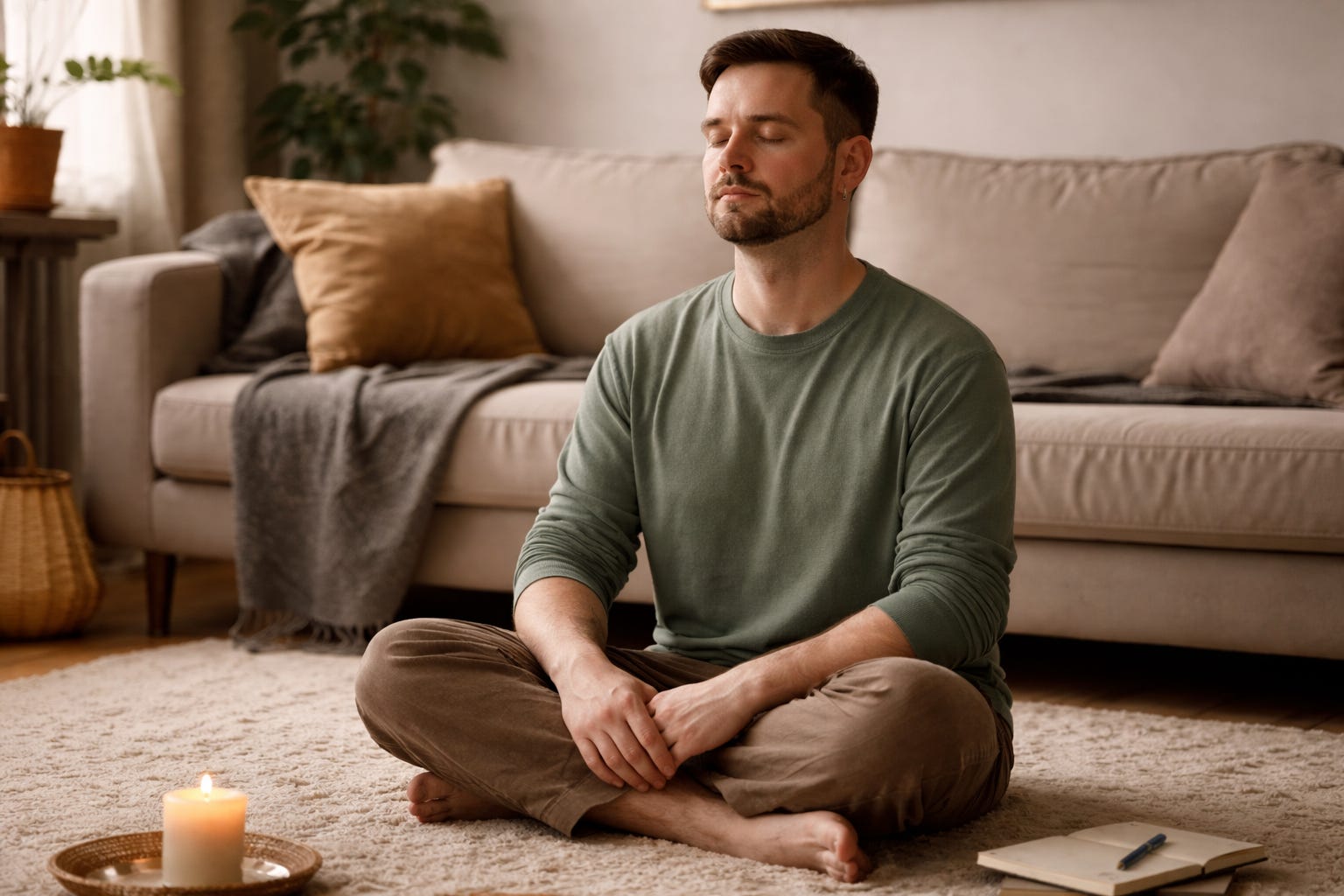
There’s a subversive beauty to a queer man choosing to sit in silence. In a culture that’s constantly selling us gym memberships, skincare routines, and the promise that happiness is just one more Grindr message away, the simple act of contemplation feels almost revolutionary.
I didn’t stumble into contemplative practice because I was particularly spiritual. I was exhausted of the mental gymnastics of existing in a world that hasn’t quite figured out what to do with us, and equally tired from navigating a community that feels like it’s borrowed values wholesale from the very systems that oppress us. When you’re told you’re too fem, too masc, too old at thirty-five, too fat, too thin, too much, or not enough, sitting still becomes an act of resistance.
Contemplative practices like centering prayer offer something radical: permission to just be. For twenty minutes, you’re not your body, your dating profile, or your career trajectory. You’re not the son your parents expected or the stereotype strangers assume. In centering prayer, you choose a sacred word and return to it whenever thoughts arise—which, let’s be honest, is constantly. But that’s the point. Each time you notice you’ve drifted into worrying about whether you’re aging out of relevance or rehearsing comebacks to homophobic relatives, you gently return. It’s forgiveness in real-time, and God knows we could use more of that.
Lectio divina, the practice of slowly reading and meditating on sacred texts, offers similar grounding. You read a passage four times, each with a different intention, letting words settle into you rather than rushing through for comprehension. It’s the antithesis of doomscrolling. When you’re used to consuming everything at warp speed—news, hookups, outrage—the practice can become deeply healing. Lectio allows wisdom to sink in slowly, the way good whiskey should be sipped, not shot.
Then there’s the Examen, a daily practice of reviewing your day to notice where you felt most alive and where you felt drained. For queer men who’ve spent years monitoring ourselves—Is my voice too high? Am I standing too close? Will this get me harassed?—the Examen reframes that vigilance as spiritual awareness. Instead of surveillance, it becomes sacred attention. Where did I encounter love today? Where did I miss it?
Writers like Richard Rohr and James Martin have explored contemplation’s transformative power, though queer voices in this space are often quieter, more hidden in plain sight. Mark Doty’s work breathes with mindful presence. We’ve always been here in the margins of spiritual practice, finding God in unexpected places.
What contemplation offers queer men isn’t escape—it’s homecoming. When the world keeps insisting you should be someone else, and when our own community still measures worth by bicep circumference or Instagram followers, sitting in silence becomes a declaration: I am enough as I am, right now, in this moment.
Contemplative practice won’t make the wrinkles disappear or the discrimination vanish. You’ll still get overlooked by guys who have height requirements in their bios. Influencers will continue to peddle their grift. The world will continue being the world. But in that stillness, you might discover something the apps and social media can’t sell you: a connection to Spirit, to your truest self, to the ground beneath your beautifully complicated feet.
And sometimes, that’s more than enough.